
Find out what’s going on in the UK: Map of UK Fracking Sites
“Fracking is a nightmare! Toxic and radioactive water contamination, severe air pollution and tens of thousands of wells, pipelines and compressor stations devastating our countryside and blighting communities. All this to produce expensive gas that will soon run out using a process that directly accelerates climate change.”
So why would anyone want to do it?
Extreme Energy
Fracking is just a symptom of a much wider problem. As easier to extract energy resources are exhausted by the unsustainable energy consumption of the present system, we are resorting to ever more extreme methods of energy extraction. Over the last century the exploitation of fossil fuels has moved from tunnel mining for coal and drilling shallow oil wells to tearing apart whole mountains and drilling in a mile or more deep of ocean.
As existing energy resources deplete the default response has just been to try harder; dig or drill deeper; go after lower quality resources or move on to more remote locations. This increasing effort has consequences: increasing pollution, more dangerous working conditions, greater greenhouse gas emissions, more land use and less resources available to other sectors of society.
At present we are on a course which leads towards a world dominated by energy extraction, one where most of the energy produced is used to run the extraction processes while people live and die in its toxic shadow. The present system’s addiction to massive amounts of energy is driving this headlong rush towards oblivion and unless something is done to stop it we will all be dragged down into hell with it.
Tar Sands, Mountain Top Removal, Deep Water Drilling, Biofuels and Fracking are all symptoms of this scramble to suck the last and most difficult to reach drops out of our planet. Even more extreme extraction methods are being contemplated such as Oil Shale and Methane Hydrates, while existing methods are slowly growing more extreme as easier to extract resources are depleted. Find out more…
Unconventional Gas
The UK unconventional gas (and to a lesser extent oil) extraction is the main new threat, in the form of three different processes; Shale Gas, Coal Bed Methane (CBM) and Underground Coal Gasification (UCG). While there are a lot of differing technical details these processes all involve drilling large numbers of directional wells at regular intervals, coating the landscape.
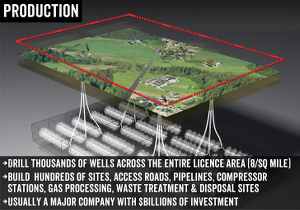
The scale of these new more intense methods are like nothing we have seen before. Up until now the largest onshore gas field in the UK, Saltfleetby in Lincolnshire, had only 8 wells. To produce the same amount of unconventional gas would require hundreds of wells to be drilled. To temporarily replace just one offshore North Sea gas field would require thousands of unconventional wells.
As well as requiring many more wells these methods also involve much more. Shale Gas and Oil require massive, slickwater hydraulic fracturing, to be carried out on every well. Millions of gallons of water, sand and chemicals are injected under massive pressure. CBM wells are also often fracked. UCG which involves setting fire to coal seams underground is even more extreme.
These unconventional wells also have much shorter lifespans, with production from a typical shale well declining by 70 to 80 percent in the first year alone. This means that large numbers of new wells need to be constantly drilled to maintain production, even for short periods. In many areas of the US unconventional gas is already peaking after less than a decade of exploitation.
Find out more about: Shale Gas – Coal Bed Methane (CBM) – Underground Coal Gasification (UCG)
Impacts of Unconventional Oil and Gas


For all these processes water contamination is a major issue. All wells will eventually leak, as steel casings rust and cement rots, and unconventional gas (and oil) means many, many more wells. Contamination of groundwater has been a consistent feature of unconventional gas extraction, in the US, Canada and Australia.
The amount of water used in these processes and the amount of waste produced are also major issues. In Colorado farmers are losing access to water as fracking companies buy up supplies. Meanwhile the vast streams of toxic and radioactive waste are a nightmare to dispose of, and attempts to get rid of this waste by injecting it into the ground are causing large numbers of earthquakes.
Air pollution is also an under appreciated threat from unconventional gas. In previously pristine wilderness areas of the US ozone levels now routinely exceed those in the centre of Los Angeles, while leaking toxic and carcinogenic hydrocarbon vapours are also common. Such pollution can be blown hundreds of miles from its source. Breathing difficulties are common complaints for those living in the shadow of these industries.
While targeted health studies of the effects of these developments have just not been done, what evidence there is shows major impacts. Cancer clusters, neurological and reproductive problems in humans and animals have all been reported and should be expected given the chemicals that are being emitted. In the vicinity of unconventional gas extraction communities are getting sick and the response has been make people prove that the industry is the cause, or shut up. Read more… See the science…
Climate Catastrophe
At a global level, there are already far more conventional fossil fuel reserves than we can afford to burn without causing catastrophic climate change. As with all unconventional fossil fuels unconventional gas (and oil) simply adds to this store of unburnable carbon. Widespread exploitation of unconventional fossil fuels could produce enough carbon dioxide to make the planet literally uninhabitable.
In the shorter term methane emissions from these processes amplify the effects of the carbon dioxide emitted. Studies have shown that Shale Gas and CBM are worse than burning coal in the short term, and it is the short term that matters when considering potential tipping points in the climate system like melting arctic permafrost and the fate of the Amazon rainforest. UCG is even worse, with its direct carbon emission far higher than from the conventional exploitation of coal. Read more…
What can be done?
While all this may seem very bleak, there are rays of hope within this dark cloud. Unconventional fossil fuels are much more dispersed than conventional ones, meaning that in order to get them many more communities are affected but must at least passively consent to their extraction. If these communities get organised to resist this invasion then it can be stopped. This is already happening is many places across the globe but everyone need to do their bit if this juggernaut is to be stopped.
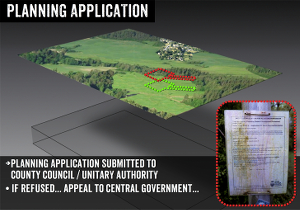
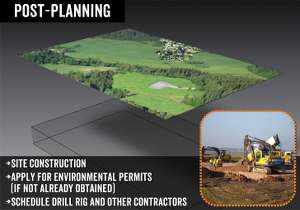
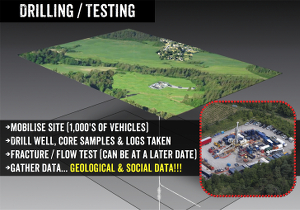
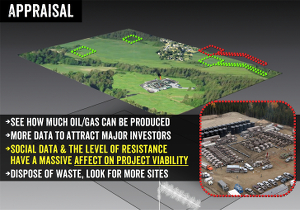
The Fracking Timeline
The fracking industry in the UK is highly speculative and entirely dependant on investment. Because it needs hundreds of sites and access to large areas of land it is vulnerable at every stage. The sooner you get started the better your chance of slowing it down and stopping it in your area and everywhere else.
Use this map to see if your area is licensed or has a survey planned: Fullscreen Map
Live planning applications & permits: Map of UK Fracking Sites
Sites in order of the level of immediate threat: Active Fracking Sites
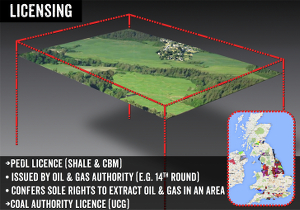
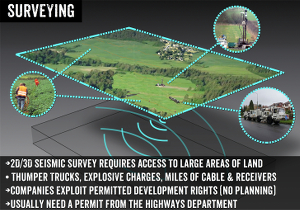
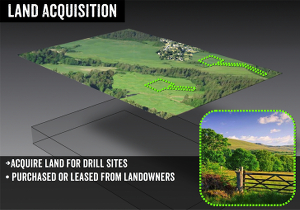
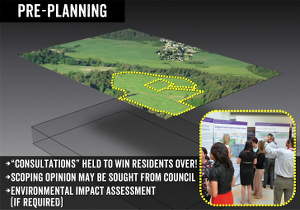
If you find that your area is licensed: What Should I do?
If you find that there is a seismic survey planned for your area: What Should I do?
An organised community is THE best defence against the Fracking industry.
If you want to take action, start planning an effective Anti-Fracking campaign where you live: Get our materials and step-by-step guides…
Want to get organised? Want to take action? Get stuck in…
